Show printable version of 'Production Properties' item in a New Window
Email 'Production Properties' item to a friend


CANADA'S ONLY PRIMARY SILVER MINE

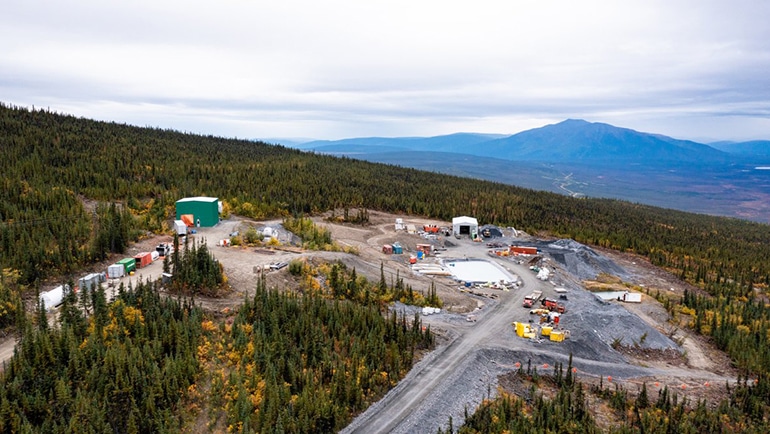
Bellekeno Mine Starts Production

In January 2011, Alexco announced the achievement of commercial production at its Bellekeno silver-lead-zinc mine and mill complex. The announcement marked a proud moment for the Alexco management team, and the achievement of a significant objective in its quest to fully exploit the significant mineral resources of the Keno Hill Silver District -- historically one of the richest and highest-grade silver districts in the world.

Construction of the Bellekeno mine and mill complex was completed in the fall of 2010, after a nine-month accelerated program. In fact, within just three short years Alexco managed to move from initial exploration at Bellekeno to full-scale silver production, a truly remarkable achievement.

The Bellekeno complex was developed and built at a cost of C$61 million, including US$50 million provided by Silver Wheaton Corp. as part of its 2008 silver purchase agreement with Alexco. The initial mine plan called for a production rate of 250 tonnes of ore processed per day on a year-round basis. From an initial indicated geologic resource of 11.9 million ounces of silver, 83 million pounds of lead and 57 million pounds of zinc, the mine is expected to produce between 2 million and 3 million ounces of silver each year for at least the next three years. The total estimated life-of-mine metal production is 8.6 million ounces of silver, 65.2 million pounds of lead and 35.2 million pounds of zinc.

In 2010 and 2011, Alexco has carried out extensive surface and underground drilling to explore extensions to the Bellekeno mineralization. Surface step-out drilling to the southwest of the mine site has located high-grade lead-silver mineralization 130 meters down-plunge from the existing Bellekeno resource, with one intercept grading nearly 80 ounces of silver per ton. Results from this and other Bellekeno-related exploration are being used to guide further development of the mine and is expected to result in the calculation of additional mineral resources in 2012, hopefully leading to an extended mine life.

The Bellekeno mineral resource base comprises one primary vein (the 48 vein), a subsidiary structure (the 49 vein), and at least nine ancillary structures present in the Southwest, 99 and East zones. Historically, most of the mining at Bellekeno occurred on the 48 vein in the 99 zone. Vein thickness varies from a few centimeters to several meters in an apparent "shoot-like" configuration.

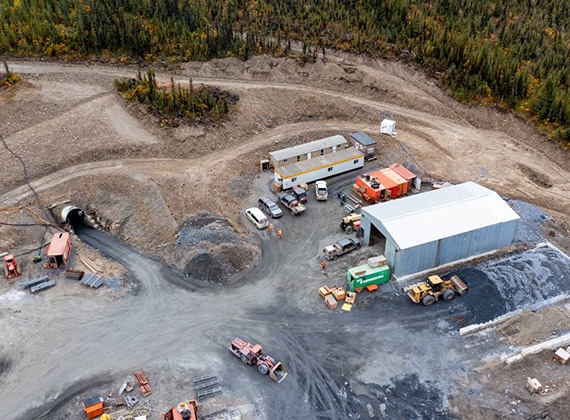
Bellekeno Mining Operation

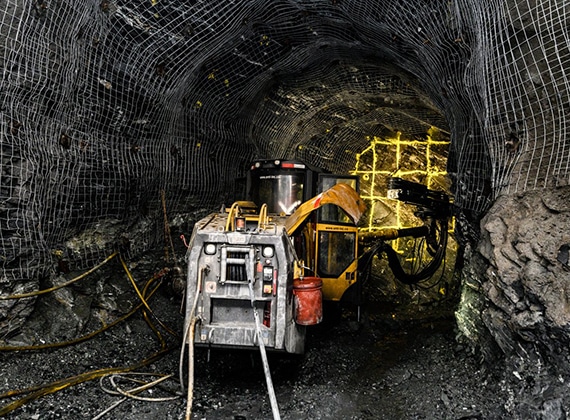
Mining operations at Bellekeno are managed under contract by Procon Mining and Tunnelling, a highly experienced mining contractor, in a joint venture with the Nacho Nyak Dun Development Corporation. The mine operates on a schedule of two 11-hour shifts per day, seven days a week, with Alexco providing supervisory operations management.

Mining is done using mechanized cut-and-fill mining methods augmented with conventional stoping to optimize high-grade mineral extraction and minimize dilution. Mined-out stopes are backfilled with a cemented blend of waste rock and the pyritic component of dry filtered tailings from Alexco's mill, which are backhauled into the mine. These materials are available in abundant quantities and easily meet the mine's backfill requirements.

The use of pyrite-bearing waste and tailings for backfill within the Bellekeno Mine is aligned with best environmental practice in the mining industry. Underground disposal of these tailings within mined-out stopes effectively isolates them and prevents them from contaminating the soil and water courses of the surface environment.

Bellekeno Milling Operation

The Bellekeno mill is located approximately 4.5 kilometers from the east portal of the mine. Run-of-mine material from different mineralized zones is processed by conventional crushing, grinding and flotation, followed by concentrate and tailings dewatering. The mill is designed to produce both lead and zinc concentrates. Silver minerals are intimately associated with lead and are recovered as a silver-lead concentrate. Concentrates are transported off-site to smelters for treatment and metal refining. The tailings are filtered and stored in a dry stack tailings facility located adjacent to the mill and, when used for backfill, ensure the highest environmental integrity at the mine facilities.  

Adnet Communications Inc.